Retro Revival: 10 Iconic 80s Men’s Fashion Trends You Should Know

Retro Revival: 10 Iconic 80s Men’s Fashion Trends You Should Know

The 1980s men’s fashion scene was a decade of bold style, fearless self-expression, and unforgettable trends. Oversized blazers, graphic tees, and statement accessories defined the era. More than just trends, these 80s fashion men loved embraced confidence and individuality.

Whether you love vintage 80s fashion or want to add a retro twist to your wardrobe, these 10 trends will help you bring back the best of 80s men’s outfits.

The Rise of Casual Wear: Tracksuits and Windbreakers

80s men’s fashion revolutionized casual wear, making it a cultural phenomenon. The iconic 80s tracksuit became a staple, inspired by hip-hop and sports legends like Run-D.M.C. These retro tracksuits combined comfort with bold style, often featuring bright colors, flashy patterns, and oversized fits. Brands like Adidas, Nike, and Puma led the trend, making matching sets a must-have in 80s streetwear fashion.

Windbreakers were another standout piece in 80s fashion for men. Lightweight and practical, these retro windbreakers embraced bold color-blocking, geometric designs, and neon accents. Today, their revival in vintage 80s fashion trends proves their lasting appeal, with modern windbreakers offering updated materials and sleeker silhouettes.

Casual wear in the 1980s wasn’t just about comfort—it was about making a statement. The 80s fashion aesthetic redefined men’s style by embracing individuality, a mindset that continues to shape modern men’s fashion today.

Bold Prints and Patterns: Stand Out with Confidence

Style in the 80s was all about making a statement, and bold prints defined the decade. Geometric designs, animal prints, and vibrant colors transformed everyday outfits into iconic 80s fashion moments.

Hawaiian shirts weren’t just for vacations—they became a go-to for effortless, eye-catching style. These 1980 outfits featured oversized fits, bright floral patterns, and lightweight fabrics. Today, they’ve made a comeback with modern silhouettes and retro-inspired designs, proving that 80s men’s outfits still influence fashion.

Graphic tees turned simple shirts into personal statements. From band logos and movie references (think classic horror movies and 80s family movies) to artistic prints, these tees reflected pop culture and individuality. Even today, bold graphics remain a core element of 80s attire for men and women, keeping the legacy alive.

Animal prints pushed fashion boundaries. Leopard, zebra, and snake patterns added a wild edge to men’s 80s style, appearing on everything from jackets and button-downs to sneakers. This trend has returned, now with refined designs and muted tones, proving that eighties fashion for men remains timeless.

Want to add retro energy to your wardrobe? Start with these fearless prints—the 80s got it right. Whether you’re channeling 80s guys’ fashion for a themed event or incorporating 80s style outfits for men into everyday wear, these prints bring vintage flair into modern fashion.

Denim Dominance: The Legacy of Jeans and Jackets

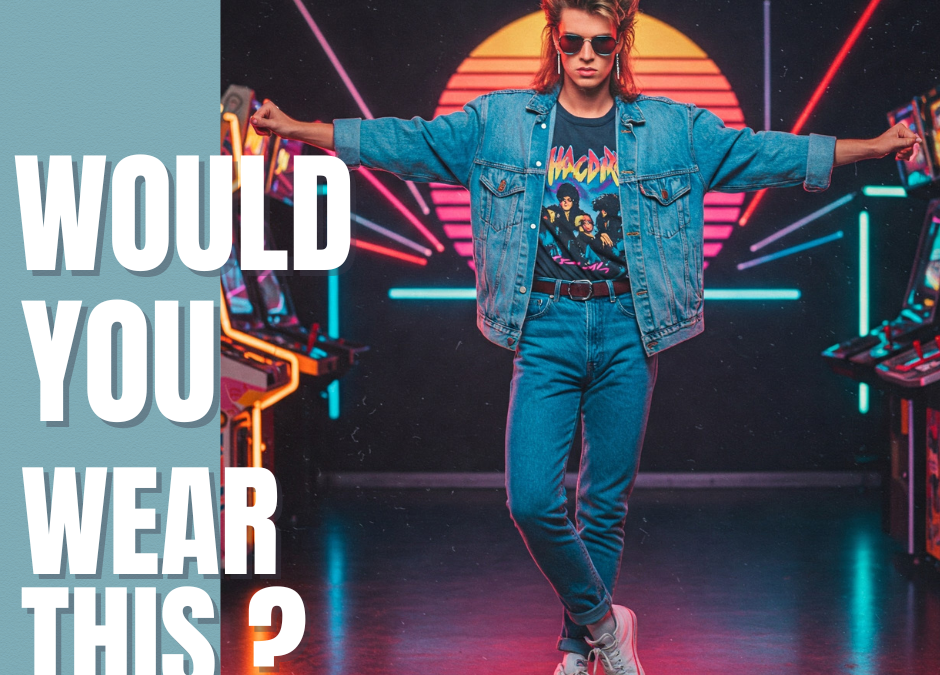
The 80s fashion scene took denim from a basic staple to an iconic statement piece. Whether it was acid-washed jeans, oversized jackets, or bold double denim looks, this decade cemented denim’s place in fashion history.

Denim jackets were must-haves, offering a mix of rebellion and self-expression. With oversized fits, rolled-up sleeves, and custom patches, they became deeply personal fashion statements. Today, these jackets remain essential 80s style outfits for men, now updated with sleeker cuts and modern finishes.

Jeans evolved, too. The rise of acid-washed denim—with its distinct bleached look—embodied the 1980s’ edgy, rebellious spirit. Rock stars, trendsetters, and everyday style enthusiasts embraced the look, making it a symbol of 80s guys’ fashion. Now, acid-washed jeans are making a comeback, refreshed with contemporary fits and subtler treatments.

Double denim—once daring, now iconic. Pairing denim jackets with jeans in contrasting washes was a bold move, but 80s men’s outfits made it mainstream. Celebrities led the charge, proving that denim-on-denim wasn’t just a trend—it was a statement. Today, this classic 80s style returns with refined silhouettes and modern styling.

The 80s proved denim is more than just fabric—it’s a legacy. Whether you’re recreating an 80s fashion look for men or adding a vintage edge to your wardrobe, denim remains an essential piece of style history.

Music and Pop Culture: The Ultimate Trendsetters

The 80s weren’t just about fashion—they were about attitude, and music and film set the tone. With the rise of MTV, musicians became style icons overnight, shaping trends that still influence fashion today.

  • Michael Jackson’s red leather “Thriller” jacket became a cultural phenomenon, embodying the boldness of the decade.
  • Prince shattered fashion norms with his flamboyant, gender-fluid aesthetic, proving that style is an extension of self-expression.
  • David Bowie blurred boundaries with avant-garde ensembles that mixed art, music, and fearless individuality.

Punk and new wave also redefined menswear.

  • Punk rockers like The Ramones and The Sex Pistols embraced rebellion with ripped clothes, leather jackets, and DIY embellishments.
  • New wave bands like Duran Duran and The Human League introduced sleek, futuristic fashion, making sharp suits and metallic fabrics mainstream.

Hollywood sealed the deal.

  • Top Gun made aviators and bomber jackets essential, turning military-inspired fashion into a lasting trend.
  • The Breakfast Club captured teenage rebellion and preppy aesthetics, influencing a generation of style choices.

The impact of 80s pop culture isn’t just reflected in fashion—it’s alive in our memories. If you have old VHS tapes, film reels, or vintage photos, don’t let them fade with time. The Digitize Center helps you preserve these moments by converting them into digital formats, ensuring that both fashion and nostalgia live on in the modern age.

Accessories That Made a Statement: From Headbands to Chunky Jewelry

Accessories were the exclamation points of 80s fashion—bold, oversized, and impossible to ignore. Whether sporty, flashy, or effortlessly cool, these statement pieces defined an era and continue to inspire trends today.

Headbands: The Ultimate Sporty-Chic Accessory

Headbands weren’t just for the gym—they were a full-fledged fashion statement. Made famous by fitness icons and celebrities, these stretchy, neon-colored bands added a sporty edge to casual and athleisure outfits. Whether worn to keep sweat at bay or simply to complement voluminous 80s hairstyles, headbands became an essential part of the decade’s energetic aesthetic. Today, they’ve made a stylish comeback, with sleek, modern versions blending fashion and function effortlessly.

Chunky Jewelry: Bigger, Bolder, Better

The 80s embraced maximalism, and nowhere was this more evident than in jewelry. Oversized gold chains, statement earrings, and thick bangles dominated, bringing a touch of opulence to everyday wear. Heavily influenced by hip-hop culture, artists like LL Cool J and Big Daddy Kane made chunky gold accessories a status symbol. Now, the trend is back, reimagined with contemporary elegance—bold enough to make a statement but refined enough for modern style sensibilities.

Sunglasses: The Cool Factor

Shades weren’t just functional in the 80s; they were an attitude. Iconic styles like:

  • Aviators – Popularized by Tom Cruise in Top Gun, these sleek frames exuded confidence.
  • Wayfarers – Classic, versatile, and favored by celebrities and trendsetters alike.
  • Oversized Frames – Often in bold colors or patterns, these dramatic sunglasses made sure you stood out.

These iconic eyewear styles remain just as relevant today, proving that the right pair of sunglasses never goes out of style.

The 80s were all about making a statement, and the accessories of the decade did just that—loud, proud, and undeniably unforgettable.

Footwear Trends: Sneakers, Loafers, and Combat Boots

The 80s were a defining decade for footwear, with styles that ranged from sporty and sleek to rugged and rebellious. Whether it was the rise of sneaker culture, the preppy sophistication of loafers, or the gritty edge of combat boots, shoes weren’t just practical—they were a statement.

Sneakers: The Birth of an Iconic Culture

Sneakers weren’t just for sports in the 80s—they were a lifestyle. With the explosion of hip-hop, breakdancing, and basketball culture, brands like Nike, Adidas, and Reebok became household names. The Nike Air Jordan, launched in 1985, changed the game forever, turning sneakers into a global obsession. These kicks weren’t just about performance—they were bold, stylish, and a must-have status symbol. Decades later, Air Jordans and other retro sneakers are still at the forefront, proving that classic designs never die—they just evolve.

Loafers: Effortless Sophistication

For those who wanted a polished, put-together look, loafers were the ultimate go-to. Penny loafers in particular became an essential part of the preppy aesthetic, blending casual comfort with timeless elegance. Whether paired with a power suit or rolled-up jeans, loafers added a touch of effortless refinement. Today, they’ve made a major comeback, with designers reinventing them in bold colors, chunky soles, and modern materials—proving that classic never goes out of style.

Combat Boots: The Rebellion Footprint

On the opposite end of the spectrum, combat boots became the footwear of choice for rebels and nonconformists. Originally designed for military use, these tough, lace-up boots were embraced by the punk and grunge movements, becoming a staple of underground fashion. Paired with ripped jeans, leather jackets, and an attitude to match, combat boots symbolized defiance and individuality. Fast-forward to today, and they’re still a wardrobe essential—gritty, versatile, and endlessly cool.

From sneakerheads to preppy elites to punk rockers, 80s footwear trends weren’t just about fashion—they were about identity. And as history has shown, the best styles never truly fade; they just find new ways to walk into the future.

 Fashion isn’t the only thing making a comeback—our memories deserve to be brought back to life, too. Whether it’s old VHS tapes, film reels, or vintage photographs, The Digitize Center helps you convert them into digital format, so you can keep the past alive in the modern age.

The Return of Vintage Styles in Modern Fashion

Fashion is a cycle—what was once old inevitably becomes new again. The resurgence of 80s-inspired trends is a testament to the decade’s bold aesthetics and fearless self-expression. From retro prints to power silhouettes, designers continue to draw inspiration from the past, reimagining classic styles with a fresh, modern twist. This revival allows fashion enthusiasts to embrace nostalgia while staying ahead of contemporary trends.

80s Fashion: A Celebration of Individuality

One of the biggest reasons for the return of vintage styles is the emphasis on individuality and self-expression. The 80s encouraged people to take risks, mix bold colors, and experiment with unique silhouettes—a spirit that resonates strongly today. In an era where personal branding is key, fashion has once again become a powerful tool for standing out. Whether it’s oversized blazers, statement shoulders, or neon accents, the 80s provide a daring, expressive aesthetic that aligns perfectly with today’s fashion-forward mindset.

Sustainability and the Vintage Revival

Beyond aesthetics, sustainability is playing a major role in the resurgence of vintage fashion. With growing concerns over fast fashion’s environmental impact, consumers are turning to more eco-friendly alternatives, such as second-hand shopping and upcycled clothing. Thrift stores, vintage boutiques, and resale platforms have made it easier than ever to find high-quality, one-of-a-kind pieces from past decades. The return of 80s styles isn’t just about nostalgia—it’s also about mindful consumption and giving fashion a second life.

The beauty of vintage fashion lies in its ability to blend the best of the past with the innovation of the present. Whether through authentic thrift finds or modern reinventions, the influence of the 80s remains stronger than ever—proving that great style never truly fades, it just evolves.


The Timeless Appeal of 80s Fashion

The 80s were an era of bold choices, fearless individuality, and statement-making style. Decades later, the influence of this iconic period still shapes modern fashion. From oversized blazers and neon colors to chunky accessories and high-waisted jeans, the trends of the past continue to inspire today’s looks—proving that great style never fades.

Why 80s Fashion Still Matters

Fashion has always been a powerful form of self-expression. In the 80s, people embraced daring silhouettes, eye-catching prints, and unapologetic confidence in their style. Today, as vintage trends resurface, they bring a perfect blend of nostalgia and modernity, allowing us to relive the best of the past while making it fresh and relevant.

Preserving More Than Just Fashion

The love for the 80s goes beyond fashion—it’s about keeping the past alive. Just as vintage styles are making a comeback, so too are the memories tied to them. Old VHS tapes, film reels, and vintage photos hold priceless moments that deserve to last. The Digitize Center helps you convert these treasures into digital format, ensuring they remain safe for generations to come.

Make the Past Your Own

The lasting appeal of 80s fashion proves that style is timeless. Whether you love an all-out retro look or prefer subtle vintage touches, this era offers endless inspiration. So go ahead—take a cue from the past, mix it with the new, and make it uniquely yours.

Preserve Old Family Photo Memories

Preserve Old Family Photo Memories

As the eldest grand daughter, I’ve always felt a special connection to my family’s history. It’s like I carry the stories, the memories, the very essence of our past within me.

And nowhere is that connection more tangible than the old photos I’ve inherited.

These aren’t just snapshots; they’re glimpses into lives lived, moments frozen in time, and the very foundation of who I am.


I have photos that date back to the 1950s, black and white images that whisper tales of a different era. Seeing my mom as child, their parents as young adults, it’s like the past comes alive. But the most precious photos of all are the ones of me as a baby.

These photos are more than just pictures; they’re a visceral link to my roots, a confirmation of my place in the tapestry of our family. They ground me, remind me of where I come from, and give me a sense of belonging that’s deeply profound.

Holding these photos, I feel the weight of responsibility. These fragile pieces of history are in my care now.


They’re my legacy, and I want to preserve them, not just for myself, but for my children and grandchildren, and the generations to come. I want them to know their ancestors, to see the faces and understand the stories that shaped them.

But old photos are delicate. They fade, they tear, they can be lost or damaged so easily. I knew I needed to find a way to protect these precious memories before it is too late.


preserve memories

What is The Digitize Center?

The Digitize Center is a fantastic service that specializes in preserving memories by converting old photos, videos, film, and audio into digital formats. They understand how precious these items are and provide a safe and easy way to protect them for future generations. It’s a way to take those fading, fragile memories and give them new life in the digital age.

How Does it Work?

The process is incredibly simple and convenient:

  1. Order the Digitize Kit: You start by ordering the Digitize Kit online. This kit is specially designed to protect your media during shipping.
  2. Pack Your Memories: Once you receive the Digitize Kit, carefully pack your photos, videos, film reels, and any other media you want to digitize.
  3. Ship to The Digitize Center: Use the prepaid shipping label provided to send your Digitize Kit back to The Digitize Center.
  4. Digitization: Their team of experts will carefully digitize your media, ensuring the highest quality conversion.
  5. Enjoy Your Memories: Once the digitization process is complete, you can instantly stream, view, and download your memories on any of your devices – smartphones, smart TVs, computers, and laptops.
     

6 Reasons Why Graphic Design Is Important

6 Reasons Why Graphic Design Is Important

In today’s digital world, where attention spans are shorter than ever, understanding why graphic design is important is crucial for anyone looking to make a lasting impression. With millions of websites and blogs vying for eyeballs, it’s easy for your message to get lost in the shuffle. But what if there was a secret weapon that could elevate your brand, captivate your audience, and drive real results?


That secret weapon is graphic design.


It’s more than just making things look pretty – it’s a strategic communication tool that speaks volumes about your professionalism, credibility, and attention to detail. From eye-catching visuals that stop scrollers in their tracks to informative graphics that make complex ideas easy to understand, graphic design is the key to unlocking your online potential.


This in-depth guide will reveal the six game-changing reasons why graphic design is essential for your blog or business and how it can transform your online presence.


The Irrefutable Impact of Visuals

  • 94% of first impressions are design-related. Your visuals are the first handshake with potential customers or readers.
  • The human brain processes images 60,000 times faster than text. Visuals cut through the clutter and communicate your message instantly.
  • Content with relevant images gets 94% more views than content without relevant images.
  • Strong branding, built through consistent visuals, can increase revenue by 23%.
  • Optimized images improve your website’s search engine ranking, leading to increased traffic and better visibility.

Transform Your Online Presence

Imagine your blog posts becoming magnets for readers, drawing them in with eye-catching visuals and keeping them engaged with informative graphics. Picture your brand becoming instantly recognizable, thanks to a cohesive visual style that builds trust and loyalty.

By investing in graphic design, you’re investing in:

  • Captivating your audience.
  • Communicating your message with clarity and impact.
  • Connecting with your audience on a deeper level.
  • Converting visitors into loyal followers and paying customers.

Seize the Visual Advantage

Your competitors are already leveraging the power of graphic design to elevate their brands and capture their target audiences. Don’t get left behind. Seize the visual advantage and watch your blog or business soar to new heights.

Why Graphic Design Is Important: 6 Game-Changing Reasons

  1. First Impressions That Wow: A well-designed website or blog instantly signals professionalism and credibility, encouraging visitors to explore further.
  2. Communication That Connects: Compelling graphics simplify complex ideas, making your message more accessible and memorable.
  3. User Experience That Delights: Intuitive navigation, clear layouts, and visually appealing elements keep visitors engaged and coming back for more.
  4. Social Sharing That Amplifies: Eye-catching visuals are more likely to be shared on social media, expanding your reach and driving more traffic to your site.
  5. Brand Recognition That Builds Trust: A cohesive visual style across your platforms creates a strong brand identity, fostering trust and loyalty among your audience.
  6. SEO That Boosts Visibility: Optimized images with relevant keywords and descriptions improve your website’s search engine ranking, ensuring your content reaches a wider audience.

The Power of Visuals Awaits

Graphic design is more than just an aesthetic enhancement; it’s a strategic investment that empowers you to connect with your audience, elevate your brand, and achieve your online goals.

Don’t wait another day to unlock the potential of visuals. Invest in graphic design today and watch your blog or business flourish in the digital landscape.

Take the next step and explore design tools like ClickDesigns (click here) to create stunning visuals that will set your blog or business apart.  Remember, graphic design is more than just decoration in the digital landscape—it’s a powerful tool for communication, engagement, and success.

In today’s digital world, where attention spans are shorter than ever, understanding why graphic design is important is crucial for any business looking to make a lasting impression. With countless brands vying for consumer attention, it’s easy for your message to get lost in the shuffle. But what if there was a secret weapon that could elevate your brand, captivate your audience, and drive real results?


Unlocking Business Potential: The Power of Visual Communication

Graphic design isn’t just about making things look pretty; it’s a powerful tool that can transform your brand, captivate your audience, and drive business growth.

What is graphic design, exactly?

In essence, graphic design is the art of visual communication. It’s about using images, typography, and layout to convey ideas and messages effectively. From logos and websites to marketing materials and social media graphics, graphic design is everywhere in the business world.

But why is graphic design so important?

It boils down to its ability to communicate quickly and effectively, leaving a lasting impression on your audience. In a world saturated with information, visuals cut through the noise and help you connect with your customers on a deeper level. It’s about answering the question “why does graphic design matter” with tangible results.

The Multifaceted Impact of Graphic Design on Business Growth

Investing in graphic design can have a profound impact on your business growth in several key areas:

Forging a Memorable Brand Identity: The Importance of Graphic Design in Branding

A well-designed logo serves as the visual cornerstone of your brand identity. It’s the representation of your business, encapsulating your values and mission. Think of iconic brands like Apple or Nike; their logos are instantly recognizable and evoke a sense of trust and quality. That’s the importance of graphic design in business.

Consistent use of colors, fonts, and imagery across all your marketing materials further strengthens your brand identity. This cohesive visual language creates a sense of familiarity and professionalism, helping your business stand out in the competitive Philippine market. It showcases the graphic design importance in business.

Communicating with Clarity and Impact: The Role of Graphic Design in Digital Marketing

Visuals are processed faster than text, making graphic design a powerful tool for conveying your message quickly and clearly. A well-designed infographic, for example, can distill complex information into easily digestible visuals, making it more accessible and engaging for your audience. This highlights the crucial role of graphic design in digital marketing.

In a world where attention spans are shrinking, graphic design helps you capture and hold your audience’s interest, ensuring your message is not only seen but also understood.

Attracting and Engaging Customers: The Advantages of Graphic Design in Marketing

Eye-catching visuals are essential for grabbing attention in today’s fast-paced digital landscape. Whether it’s a stunning social media graphic, a beautifully designed website, or an attention-grabbing advertisement, graphic design helps you entice potential customers and make a memorable first impression.

By strategically using visuals, you can create marketing materials that resonate with your target audience, evoke emotions, and inspire action. This demonstrates the undeniable importance of graphic design in marketing.

Enhancing Professionalism and Credibility: Why Graphic Design is Important for Any Business

A polished and professional visual presence builds trust and credibility with your customers. It conveys that you take your business seriously and are committed to quality.

Personal relationships and trust play a significant role in business dealings, projecting a professional image through graphic design is paramount. This underscores why graphic design is important for any business, regardless of size or industry.

Addressing the Concerns: Is Graphic Design Truly Worth the Investment?

As a business owner, we understand that you might be concerned about the cost of investing in professional graphic design. However, it’s important to view graphic design not as an expense but as a valuable investment in your business’s future. It’s about understanding why is graphic design important for business growth and longevity.

Perhaps you’re wondering, “Is graphic design worth it for my small business?” or “How can graphic design help me attract more customers?” These are valid questions, and the answer lies in recognizing the tangible benefits that graphic design brings to the table.

The benefits of graphic design far outweigh the costs:

  • Increased brand awareness and recognition
  • Improved customer engagement and loyalty
  • Higher conversion rates and sales
  • Enhanced professionalism and credibility
  • A competitive edge in the market

These benefits directly address the pain points many business owners face, such as struggling to stand out in a crowded market, attracting and retaining customers, and building a strong brand identity. By investing in graphic design, you’re investing in solutions to these challenges and paving the way for sustainable growth.

If you’re on a tight budget, there are still ways to leverage the power of graphic design. You can explore affordable options like:

  • DIY graphic design tools: User-friendly platforms like ClickDesigns empower you to create professional-looking visuals even without design experience.
  • Freelance designers: Collaborate with talented freelance designers who offer competitive rates.
  • Barter or trade services: Exchange your skills or services with a graphic designer to get the visuals you need.

Remember, even a small investment in graphic design can yield significant returns for your business. It is definitely worth it!

Why Graphic Design Is Important: 6 Game-Changing Reasons

  1. First Impressions That Wow: A well-designed website or blog instantly signals professionalism and credibility, encouraging visitors to explore further. (Source: Adobe)
  2. Communication That Connects: Compelling graphics simplify complex ideas, making your message more accessible and memorable. (Source: HubSpot)
  3. User Experience That Delights: Intuitive navigation, clear layouts, and visually appealing elements keep visitors engaged and coming back for more. (Source: Nielsen Norman Group)
  4. Social Sharing That Amplifies: Eye-catching visuals are more likely to be shared on social media, expanding your reach and driving more traffic to your site. (Source: Buffer)
  5. Brand Recognition That Builds Trust: A cohesive visual style across your platforms creates a strong brand identity, fostering trust and loyalty among your audience. (Source: Lucidpress)
  6. SEO That Boosts Visibility: Optimized images with relevant keywords and descriptions improve your website’s search engine ranking, ensuring your content reaches a wider audience. (Source: Moz)

Empowering Women Entrepreneurs: Embrace Your Creativity with ClickDesigns

Whether you’re a seasoned designer or just starting, ClickDesigns provides an intuitive and affordable solution for creating stunning visuals that elevate your brand.

With its vast library of templates, easy-to-use drag-and-drop editor, and powerful features, ClickDesigns makes it simple to craft professional-looking graphics for your website, social media, marketing materials, and more.

No more relying on expensive designers or struggling with complicated software. With ClickDesigns, you have the power to create captivating visuals that capture your brand’s essence and resonate with your audience.

Embrace the Power of Visual Communication

Graphic design is not just a luxury; it’s a necessity for businesses that want to thrive. By investing in graphic design or utilizing user-friendly tools like ClickDesigns, you can create a visually stunning brand that attracts, engages, and converts your ideal customers.

Remember, the success of your business depends on your ability to communicate effectively and make a lasting impression. Graphic design is the key to unlocking that potential and achieving your entrepreneurial dreams.


Ready to  improve your brand with the power of graphic design? Explore ClickDesigns : CLICK HERE

Remember, every successful journey begins with a single step. Take that step today and invest in the visual language that will transform your business.

Ultimate Guide to Freelance Business Tools

Ultimate Guide to Freelance Business Tools

Hands up if you are into freelancing for the freedom, the flexibility – maybe even the chance to work in your PJs! 🙋‍♀️ It’s the dream, isn’t it?

But let’s be real, after 16 years in the game, I can tell you, it’s not always that picture-perfect. Juggling clients, chasing invoices, and the constant hustle for new gigs? It can feel like a circus act sometimes! 🤹‍♀️

The good news? It doesn’t have to be all hustle and chaos. I’ve discovered a toolbox of amazing freelance business tools that have been absolute game-changers.

Why Your Freelance Business NEEDS These Tools (Trust Me!)

Think of these tools as your personal assistants, working tirelessly behind the scenes to keep your business running smoothly. Here’s what they can do for you:

  • Reclaim Your Time: Remember that time you spent three hours digging through emails to find a single attachment? With the right tools, those days are over. Automation is your new best friend.
  • Skyrocket Productivity: No more scattered to-do lists or missed deadlines. A streamlined workflow means you get more done in less time, leaving room for that afternoon yoga class or family time.
  • Boost Your Credibility: Impress clients with polished proposals, ironclad contracts, and organized project management. It shows you’re serious about your business and value their time.
  • Master Your Finances: Say goodbye to shoeboxes full of receipts and forgotten invoices. Accounting and payment tools make managing your money a breeze.
  • Build Stronger Relationships: Clear communication is the foundation of any successful client relationship. Collaboration tools keep everyone in the loop and prevent miscommunication.
  • Market Like a Pro: Attract your ideal clients and showcase your expertise with the right marketing tools. Build your brand and watch your business grow.
  • Get Creative with AI: AI tools can be a freelancer’s secret weapon. Use them to brainstorm ideas, generate content, and create stunning visuals, even if you’re not a “creative type.”

I’ve curated this list of popular freelance tools that have been game-changers for freelancers. These are the tools that can help stay organized, productive, and profitable.


Show Off Your Skills: Marketing Tools


Your portfolio is your online calling card. Make it count!


  • Portfolio Websites: I personally use WordPress for janemaghanoy.com, but Wix and Squarespace are also great options if you want something easy to set up.
  • Social Media Management: Buffer has been my go-to for years. It lets me schedule posts across all my channels so I can stay active even when I’m busy with client work.
  • Email Marketing: I’m a big fan of Mailerlite for its automation features and beautiful templates.
  • Content Creation: Canva is a lifesaver, even if you’re not a designer. Create social media graphics, presentations, and even videos with ease.
  • Freelance Marketplaces: Don’t underestimate the power of these platforms, especially when you’re just starting. I’ve found some amazing clients

Time is Money: Time-Tracking Tools

I can’t stress this enough – track your time! It’s essential for accurate billing and understanding your own productivity.

  • Toggl Track: It’s simple, intuitive, and the reports are super helpful for analyzing how I spend my time.
  • Harvest: If you want to combine time tracking with invoicing, this is a great option.
  • Time Doctor: This is the tool for you if you need screenshots and activity monitoring (especially if you work with remote teams).
  • Everhour: If you use Asana or Trello, Everhour integrates seamlessly for easy time tracking within those platforms.
  • Clockify: Free and easy to use, perfect for those dipping their toes into time tracking.

Get Organized: Project Management Tools

These tools have saved my sanity more times than I can count!

  • Asana: This is my personal favorite for its visual timelines, task assignments, and progress tracking. It keeps me and my clients on the same page.
  • Trello: If you’re a visual learner, Trello’s Kanban boards are incredibly intuitive.
  • Monday.com: This one’s great if you need something highly customizable for complex projects.
  • ClickUp: The all-in-one tool for project management, docs, goals, and even chat.
  • Basecamp: A central hub for communication, files, and keeping track of project milestones.
  • Notion: This tool is so versatile, I use it for everything from project management to note-taking and even my personal wiki.

Talk It Out: Communication & Collaboration Tools

Clear communication is the secret sauce to happy clients and successful projects.

  • Slack:  It’s great for real-time messaging, file sharing, and quick updates.
  • Zoom: When I need to have a face-to-face meeting (even if it’s virtual), Zoom is my go-to for high-quality video calls.
  • Microsoft Teams: If your clients use Microsoft products, Teams can be a great way to collaborate on documents and projects.
  • Google Meet: For quick check-ins or casual chats, Google Meet is simple and reliable.
  • Loom: Need to explain something quickly? Record a short video with Loom. It’s way more efficient than typing out a long email.

      Money Matters: Accounting & Payment Tools

      Let’s be honest, managing finances isn’t most freelancers’ favorite thing. But with the right tools, it can be surprisingly painless!

      • QuickBooks Self-Employed:  It tracks income, expenses, mileage, and even helps me estimate my quarterly taxes.
      • FreshBooks: If you want something that combines invoicing, expense tracking, and project management, this is worth checking out.
      • Wave: Can’t beat free! Wave is surprisingly powerful for a free tool, offering both accounting and invoicing features.
      • Xero: If your business is growing and you need a more robust accounting solution, Xero is a great option.
      • Zoho Invoice: Need something simple and affordable for invoicing? Zoho Invoice has you covered.
      • Payoneer, PayPal: These are must-haves for accepting payments online. I use both to give my clients flexibility.

      Speed Demons: Tools to Work Faster

      Time is our most valuable asset as freelancers. These tools will help you get more done in less time:

      • Grammarly: My writing wouldn’t be half as good without it. Grammarly catches my typos and grammar errors so I can always put my best foot forward.
      • Hemingway App: Make your writing clearer and more concise. This app highlights complex sentences and suggests simpler alternatives, helping you communicate your ideas more effectively.
      • Lastpass, Dashlane or 1Password: These password managers securely store and auto-fill your login credentials, saving you time and frustration when accessing different accounts. Plus, they help you create strong, unique passwords for each account, enhancing your online security.

      Embrace the Future: AI-Powered Tools

      AI is the future, and it’s already here to help you supercharge your freelance business.

      • SurferSEO: This AI-powered tool has been a game-changer for my website traffic. It analyzes top-ranking pages and gives me concrete recommendations to improve my content’s SEO.
      • Koala: When I’m short on time or just need a little inspiration, Koala’s AI writing assistant helps me generate high-quality blog posts and marketing copy in minutes. 
      • Copy.ai, Jasper, Rytr: These are also great options for AI writing assistance, each with its own strengths.
      • Murf.ai: Need a professional voiceover for your videos but don’t have the budget for a voice actor? Murf.ai can turn your text into natural-sounding speech.
      • Beautiful.ai: Impress your clients with stunning presentations created with the help of AI.
      • Midjourney, DALL-E 2: These tools can generate amazing images and artwork, even if you have zero artistic talent.
      • Synthesia.io: Want to create videos without being on camera? Synthesia.io can generate realistic avatars that speak your script.

      Build Your Dream Toolkit and Crush It

      There you have it! My ultimate guide to the freelance business tools that have kept me sane, productive, and profitable for over 16 years. Remember, the best tools are the ones that work best for you. Take some time to explore, experiment, and customize your toolkit to fit your unique workflow and needs.

      By leveraging the power of these 25+ essential tools – including the incredible potential of AI – you’ll not only streamline your business but also unlock your full potential as a freelancer. So, go ahead and build that dream toolkit! Your future self will thank you.

      Places to Visit in Seoul Korea

      Places to Visit in Seoul Korea

      Seoul, South Korea was my dream trip, and it finally happened! 🇰🇷 I spent 10 amazing days exploring all the cool places to visit in Seoul. From old palaces to busy markets, and a beautiful university to awesome views, Seoul has something for everyone.

      I’m excited to share my favorite spots and tips with you, so you can plan your trip to this awesome city!


      During our trip, we had the pleasure of staying at the luxurious Novotel Ambassador Seoul Yongsan. The views from our room were incredible, and the service was top-notch – a perfect retreat after days of exploring.  And the best part? It was just a short stroll from Yongsan Station


      Palace Life: Stepping Back in Time at Gyeongbokgung Palace

      Okay, K-drama fans, buckle up! Visiting Gyeongbokgung Palace was a major highlight of my trip. Seriously, I’ve seen this place in so many dramas, and finally being there in person was like stepping into my own K-drama fantasy! 🤩

      Walking through those grand halls and courtyards, it felt like I’d time-traveled back to the Joseon era. I was half-expecting to bump into a handsome king or a feisty queen around every corner! 😂

      The Throne Hall, where the king held court, was especially mind-blowing. I could practically hear the whispers of advisors and the rustling of silk robes.

      And Sajeongjeon Hall? Oh. My. Goodness. The intricate details and the sheer history in those walls… it gave me goosebumps!

      Throne Hall
      Sajeongjeon Hall

      Namsan Seoul Tower: Breathtaking Views and K-Drama Romance

      If you’re looking for the most stunning panoramic views of Seoul, Namsan Seoul Tower is a must-visit! Even with my fear of heights, I knew I couldn’t miss this iconic landmark. Braving the Namsan Cable Car was an adventure in itself (eyes squeezed shut most of the way up! 😅). But trust me, the breathtaking views from the top, especially at night with the city lights sparkling below, made it all worthwhile.

      No wonder it’s a favorite filming location for romantic K-drama scenes! I’ve spotted it in countless shows, from classics like Boys Over Flowers to more recent hits like My Love from the Star, Legend of the Blue Sea, and Weightlifting Fairy Kim Bok Joo.

      But Namsan Seoul Tower isn’t just about the views. It’s also a popular spot for couples to leave their mark with “love locks” – just like they do in so many K-dramas! Thousands of colorful padlocks adorn the fences, each symbolizing a promise of eternal love. ❤️ It’s a truly romantic sight and a reminder of love’s enduring power.


      Namsan Cable Car

      Myeongdong

      A Divine Detour: Finding Every  Nation South Korea

      I was determined to visit Every Nation Church Mapo-gu on my own. Armed with directions from the hotel staff, I set off confidently. But, plot twist! Seoul’s streets can be a bit tricky. ‍♀️ Even with the directions, I got completely lost!

      After wandering around for what felt like hours, I started to doubt my decision to go solo. I even asked a kind stranger for help, but the language barrier proved to be a challenge. Just when I was ready to give up, a lovely woman, who also happened to be a Christian, came to my rescue! She guided me all the way to Every Nation Church. Talk about a divine intervention! 🙏

      And guess what? When I finally arrived, I was surprised to see our pastor and his wife, whom I hadn’t seen in years! It was such a heartwarming reunion, and it made the whole adventure even more special. 😊