
I had the privilege of serving as a panelist for the DTI-Go Negosyo Kapatid Mentor ME (KMME) Program, where I joined mentors and industry experts in evaluating Business Improvement Plans (BIPs) presented by MSMEs from Region IV-A CALABARZON.
The participating businesses represented a wide range of industries, including printing services, cosmetics manufacturing, food manufacturing, travel and tours, home appliance retail and services, robotics and STEM education, garments, and restaurants.
As a KMME Panelist, , one of our responsibilities was to review and provide feedback on their Business Model Canvas (BMC)—a strategic framework used to assess how a business creates, delivers, and captures value.
What I found particularly interesting was that despite operating in different industries, many businesses faced similar challenges and opportunities. The Business Model Canvas provided a structured way to analyze their business models, identify gaps, and uncover areas for growth.
What Is the Business Model Canvas?
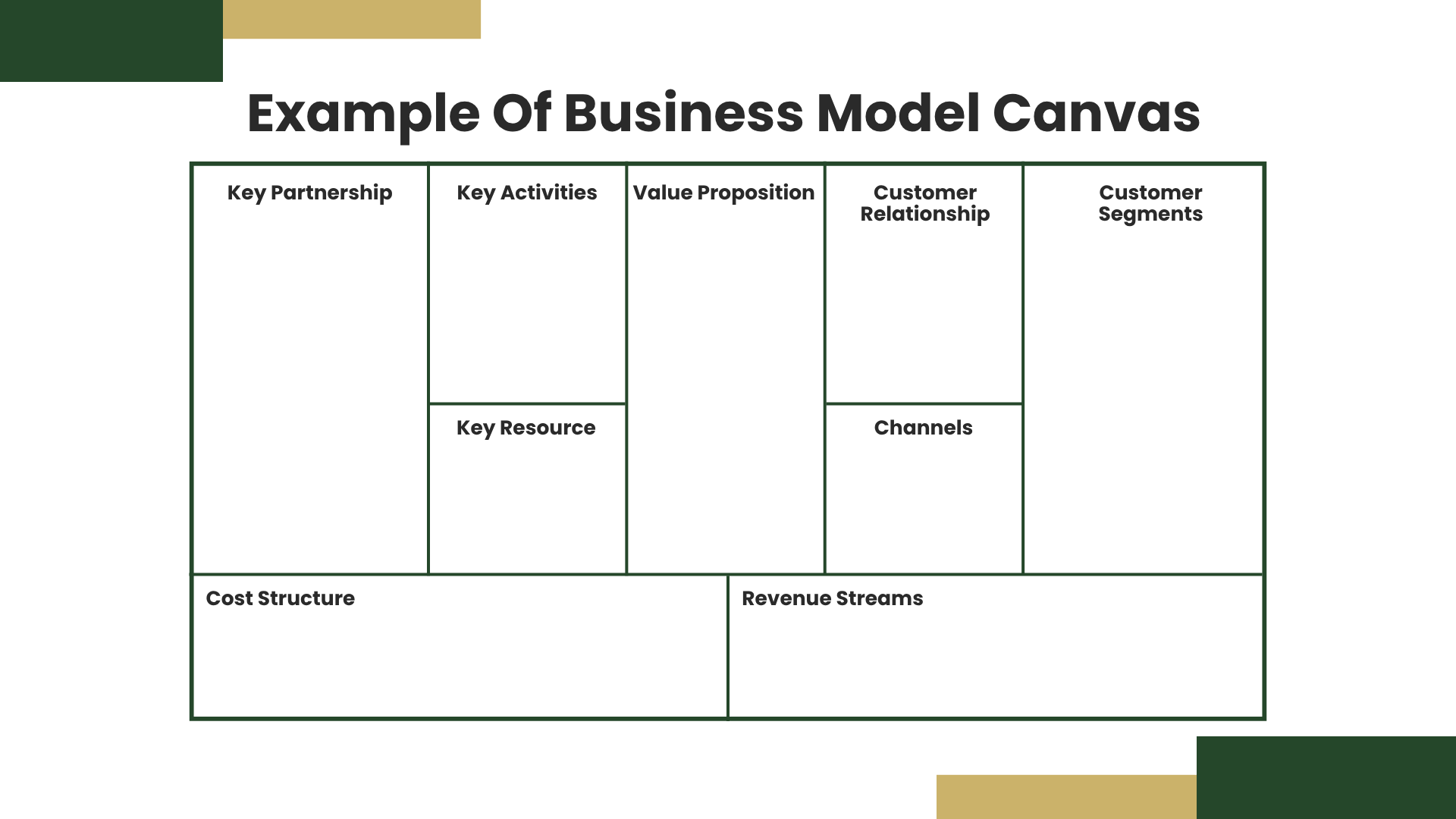
The Business Model Canvas is a strategic management tool developed by Alexander Osterwalder that allows business owners to visualize their entire business on a single page. Instead of creating a lengthy business plan, entrepreneurs can map out the key elements that drive their business and identify opportunities for improvement.
The framework is composed of nine building blocks that work together to show how a business creates, delivers, and captures value.
The 9 Building Blocks of the Business Model Canvas
1.Customer Segments
Defines the different groups of people or organizations that a business aims to serve. Understanding your customers is the foundation of every successful business model.
2. Value Proposition
What makes the business different? This section challenges business owners to clearly articulate why customers should choose them over competitors and what unique value they provide.
3. Channels
How do customers discover and access the business? Whether through physical stores, distributors, websites, social media, or online marketplaces, channels play a critical role in reaching customers effectively.
4. Customer Relationships
How does the business build trust and loyalty? This area focuses on how businesses acquire, retain, and grow customer relationships over time.
5. Revenue Streams
How does the business generate income? Understanding revenue sources helps entrepreneurs identify opportunities to diversify and improve profitability.
6. Key Resources
What assets are essential to delivering value? These may include people, equipment, technology, intellectual property, or financial resources.
7. Key Activities
What are the most important things the business must do well? This section helps focus on the activities that directly support the value proposition.
8. Key Partnerships
Who helps the business succeed? Strategic partnerships with suppliers, distributors, institutions, and technology providers can accelerate growth and improve efficiency.
9. Cost Structure
What are the major costs involved in running the business? This allows entrepreneurs to understand where resources are being invested and where efficiencies may be gained.
Why the Business Model Canvas Matters
One of the key takeaways from my experience as a DTI KMME Panelist is that many business challenges can be traced back to a lack of clarity in one or more of these nine building blocks.
The Business Model Canvas helps entrepreneurs step back and look at the bigger picture. It encourages strategic thinking, better decision-making, and a deeper understanding of how all parts of the business work together.
Whether you’re a startup founder, freelancer, MSME owner, or aspiring entrepreneur, the Business Model Canvas is a valuable tool for evaluating your current business model and planning for sustainable growth.
Serving as a DTI KMME Panelist was both an honor and a learning experience. It gave me the opportunity to engage with entrepreneurs from different industries and see firsthand how they are working to strengthen their businesses through structured planning and continuous improvement.
The experience reinforced a principle I strongly believe in:
Growth starts with clarity.
When business owners clearly understand their customers, value proposition, resources, partnerships, and revenue streams, they are better equipped to make strategic decisions and build sustainable businesses.
Ready to Build Your Own Business Model Canvas?
If you’d like to create your own Business Model Canvas but aren’t sure where to start, try my GPT- Business Model Canvas, —a guided tool designed to help freelancers, ECE professionals, startups, and MSMEs map out their business model one building block at a time.
Because every successful business starts with a clear understanding of how it creates value.
